We may earn an affiliate commission when you buy through links on this site. Thanks for supporting us! More here.
At a glance…
If you want the toughest laptop money can buy, factory-new with a full warranty and the deepest configurability on the market: the Panasonic Toughbook 40 Mk2 is in a category of its own. MIL-STD-810H, MIL-STD-461G, IP66, hot-swap dual batteries, and eight modular bays designed to be field-serviced for a decade. Score: 9.2.
If you want fleet-grade ruggedness on a consumer budget: the Getac B360 G1 (Renewed) is the lightest fully-rugged 13.3″ laptop you can buy on Amazon — 5.11 lbs, IP66, MIL-STD-461G EMI shielding, refurbished from utility and public-safety fleets at roughly 40% of new price. Score: 8.2.
And if you want a 13″ form factor with a touchscreen and a non-Panasonic build: the Dell Latitude 7330 Rugged Extreme (Renewed) brings a Tiger Lake i7 and a 1,000-nit display in a compact magnesium-alloy chassis. Score: 8.1.

- Perfect for: Storm chasers, war journalists, expedition crews who need flagship durability with full warranty

- Perfect for: Overlanders, van-lifers, field photographers wanting fully-rugged at under $2,500

- Perfect for: Remote-working journalists and field engineers who need rugged build with daily-driver ergonomics
The BIFL Revolution in Rugged Laptops
The average consumer laptop is built to last three years. Plastic chassis, sealed batteries, soldered RAM, glued displays, hinges that fail after 20,000 open-close cycles, and a manufacturer who would prefer you replace the whole thing rather than repair any of it. By the time the warranty lapses, your $1,500 ultrabook is already losing the keyboard or rattling on its hinges. That is not a quality problem — it is the business model.
The toughest laptops in the world are built to a different brief. They are sold not to consumers but to fleets — police departments, electric utilities, oil and gas crews, the military, paramedics, search and rescue, ski patrols, and every other organization that cannot afford a laptop that breaks halfway through a shift. These laptops carry MIL-STD-810H certification, IP66 sealing, MIL-STD-461G electromagnetic shielding, magnesium-alloy chassis, and hot-swappable batteries that can be replaced in the field without powering down. They are built to survive the back of a Crown Vic for ten years, with hardware service contracts that extend that lifespan further. They are designed for Buy It For Life by definition.
Until recently, those laptops were locked behind B2B distribution. New Toughbooks and Getacs are sold direct to enterprise customers at $4,500 to $8,000 a unit. That puts them out of reach for the storm chaser, the war journalist, the overlander, the van-lifer, the wildland photographer, and the off-grid homesteader who could actually use one.
The opening for consumers is the refurbished market. Fleet laptops cycle out every 3–5 years on standard refresh schedules, get professionally refurbished, and end up on Amazon as Renewed listings at roughly half the new price. A Toughbook 33 that retailed for $4,200 in 2021 sells today for around $1,500 with the bumps and scuffs of fleet service still on the chassis but every internal component working — because that chassis was designed to be repaired, not replaced. This is the BIFL sweet spot for rugged laptops in 2026: the toughest hardware ever built, refurbished after a few years of fleet abuse, sold at consumer prices.
Below are the five most durable laptops you can actually buy on Amazon in 2026 — four of them refurbished from fleet service, one of them brand new with a full Panasonic warranty. Every laptop on this list is fully rugged: IP65 minimum, MIL-STD-810H minimum, 4–6 foot drop spec, and a chassis design that can be field-serviced for the next decade.
BIFL Scoring Methodology
Every laptop on this list was scored against four criteria, each weighted equally at 25%. This is the same framework we apply across every Rugged Ratings tech category — designed so that a great score on rugged build alone cannot carry a laptop with no repairability or zero platform support, and vice versa. The four pillars of BIFL for rugged laptops:
Frame & Build (25% weight): Chassis material (magnesium-alloy > aluminum > reinforced polycarbonate), drop rating (4ft minimum, 6ft preferred), IP rating (IP65 minimum, IP66/IP66 preferred), MIL-STD-810H test methods passed, MIL-STD-461G EMI shielding where applicable, hinge mechanism, port covers, and physical robustness against vibration, dust, salt fog, humidity, and thermal cycling.
Repairability & Parts (25% weight): User-replaceable battery (hot-swap dual-battery preferred), modular storage and RAM bays, parts pipeline through OEM and authorized resellers, iFixit accessibility where rated, warranty coverage (3-year ProTect or Bumper-to-Bumper preferred), and replacement keyboards, port doors, and screen assemblies sold individually rather than only as full chassis swaps.
Platform Longevity (25% weight): CPU generation and Windows 11 support, OS update commitment from the OEM, BIOS/firmware update cadence, driver support timeline, software ecosystem (TOUGHBOOK Center, Getac Utility), and the realistic remaining service life of the unit at the time of purchase. A 7th-generation Intel chassis with no Win 12 path scores lower than a current Ultra-series unit.
Daily Versatility (25% weight): Display brightness for outdoor use (1,000 nits minimum, 1,400 nits preferred), keyboard quality, touchscreen and pen support, port selection (USB-C, Thunderbolt 4, RS-232, RJ-45, HDMI, dedicated GPS), 4G/5G connectivity, GPS module quality, weight for daily carry, dock and vehicle-mount ecosystem, and how comfortably the laptop crosses over from worksite to home office.
Final scores are a straight average of the four pillars, ranked from 0 to 10. A score of 9.0 or higher is exceptional — fewer than a dozen laptops on the market reach it. A score of 7.0 to 8.5 is the BIFL working range for most rugged-laptop buyers. Anything below 7.0 we either do not list, or list with explicit caveats about which pillar is dragging the score down.
Panasonic Toughbook 40 Mk2
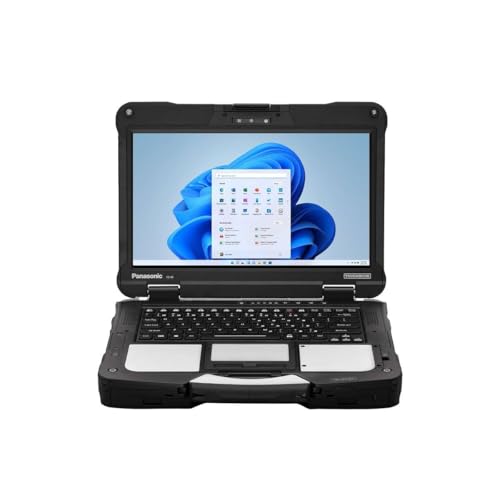
BIFL Score: 9.2 — the highest score we have ever awarded a laptop. The Panasonic Toughbook 40 Mk2 is the only laptop on this list still in production, sold factory-new through Amazon with the full Panasonic ProTect warranty. It is also the only laptop on this list designed with the explicit goal of remaining in active service for ten years or longer in field environments that would destroy a consumer-grade machine in three weeks.
The Mk2 refresh launched in 2024 with Intel’s Core Ultra processor architecture — a substantial generational improvement over the original Mk1’s 11th-gen platform, with a dedicated AI Neural Processing Unit, Wi-Fi 7, and Thunderbolt 4. The variant we recommend ships with the Core Ultra 5 135H (14 cores, up to 4.6 GHz), 32GB DDR5 RAM, a 512GB OPAL-encrypted SSD, and Windows 11 Pro out of the box. That is a configuration designed to remain useful through Windows 12 and beyond, with both the RAM and SSD field-replaceable for upgrades down the road.
The chassis is the headline. A magnesium-alloy clamshell rated to MIL-STD-810H — the most current revision of the US military’s environmental durability test methods — and independently certified to MIL-STD-461G for electromagnetic interference resilience. That second cert matters for storm chasers, war journalists, and anyone working in proximity to high-voltage electrical equipment, military radar, or industrial RF sources. IP66 sealing means the laptop is dust-tight and survives heavy water spray from any direction. Operating temperature range runs from -29°C to +63°C (-20°F to +145°F). The drop spec is six feet onto plywood across 26 measured drops per the MIL-STD method.
The defining BIFL feature is the eight-bay modular design. Two hot-swappable batteries (replaceable without powering down the laptop), a removable keyboard, removable RAM and SSD bays, and four expansion bays for xPAK modules — barcode readers, secondary storage, fingerprint scanners, second LAN ports, and more. Panasonic publishes their service manual openly. Replacement keyboards, batteries, port doors, screen assemblies, and motherboards are stocked through authorized resellers and on Amazon directly. This is a laptop you can repair indefinitely, not just because Panasonic supports it, but because it was engineered for repair from the first sketch.
Daily versatility is the only pillar where the Toughbook 40 takes a hit, scoring 8.0 against the other three pillars at 9.5. At 7.4 lbs, this is a heavy laptop. The 14-inch FHD display is 1,200 nits — outstanding outdoor readability, well above the 500-nit consumer norm — but the chassis is built around field deployment, not coffee-shop carry. If you are looking for a daily-driver ultrabook with a rugged option, this is not that laptop. If you are looking for a laptop you can take to a remote weather station, leave in the back of a Land Cruiser through a Saharan summer, and still have running for the next decade, this is the only laptop that qualifies.
- Magnesium-alloy clamshell — MIL-STD-810H, MIL-STD-461G, IP66, 6ft drop on plywood (26 drops)
- Eight modular bays — dual hot-swap batteries, replaceable keyboard, RAM/SSD bays, four xPAK expansion slots field-serviceable without tools
- OEM service parts pipeline — replacement keyboards, batteries, screens, and port doors stocked individually through authorized resellers and Amazon
- Operating range -29°C to +63°C with sealed thermal management — same chassis works in Arctic and desert deployments
- Brand-new factory unit with full Panasonic ProTect 3-year warranty
- Latest Intel Core Ultra 5 135H processor (2024 silicon) with dedicated AI NPU
- 32GB DDR5 RAM and OPAL-encrypted 512GB SSD ship as standard
- Eight modular bays support custom configuration with xPAK expansion modules
- 14-inch 1200-nit FHD display readable in direct sunlight
- Up to 24 hours of battery life with dual hot-swap battery configuration
- Wi-Fi 7, Bluetooth 5.3, Thunderbolt 4 — current-generation connectivity throughout
- The most expensive laptop on this list at $4,500 to $8,000 depending on configuration
- 7.4 lbs is heavy for daily-carry use
- Industrial chassis aesthetics make this look out-of-place in office or coffee-shop settings
- Configuration complexity requires research before ordering — many SKUs exist
Last update on 2026-07-13 at 09:22 / Affiliate links / Images from Amazon Product Advertising API
Getac B360 G1 (Renewed)
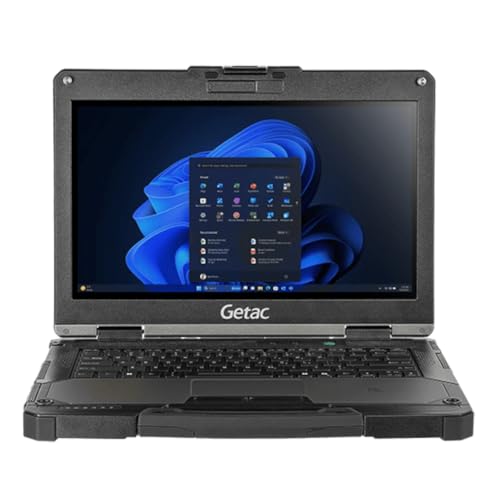
BIFL Score: 8.2 — the lightest fully-rugged 13.3-inch laptop on the consumer market in 2026. The Getac B360 G1 launched in 2020 as Getac’s flagship traditional clamshell, sold direct to police departments, electric and gas utilities, public safety agencies, and field service teams across North America and Europe. After three to five years of fleet rotation, those units are now cycling onto Amazon Renewed at roughly 40% of original new pricing. This is the BIFL sweet spot — flagship rugged hardware, fleet-tested, sold at consumer prices.
The starting weight of 5.11 lbs (2.32 kg) is the headline spec. For comparison, the Toughbook 40 weighs 7.4 lbs. The Toughbook CF-31 weighs 8.0 lbs. The B360 was specifically engineered to be the lightest fully-rugged laptop in its class — and it still holds that title five years after launch. That weight savings comes from a magnesium-alloy chassis with optimized internal layout, not from a thinner walls or weaker frame. The drop spec is six feet, the IP rating is IP66, and the certifications include MIL-STD-810H, MIL-STD-461G, and Class I Division 2 for hazardous-locations work in oil, gas, and chemical environments.
Inside, the B360 G1 we recommend ships with a 10th-generation Intel Core i5, 16GB or 32GB of RAM depending on configuration, dual user-removable PCIe NVMe SSDs, integrated smart card reader, and an integrated barcode scanner — that last feature inherited from its public-safety fleet life. The 13.3-inch LumiBond display hits 1,400 nits at peak brightness, which is the brightest panel on any consumer-accessible rugged laptop and meaningfully brighter than the Toughbook 40’s 1,200 nits. For working outdoors in direct sunlight, this display is in a class above almost everything on this list except the Toughbook 33.
The repairability story is solid but a half-step below the Toughbook 40. The B360 has hot-swap dual batteries, removable storage drives, accessible RAM and Wi-Fi modules, and a robust parts pipeline through Getac’s authorized resellers. What it does not have is the Toughbook’s eight-bay modular xPAK system, and the OEM warranty does not transfer to the second owner — so a Renewed B360 G1 ships with the seller’s 90-day Amazon Renewed guarantee rather than Getac’s full Bumper-to-Bumper coverage. For a laptop running 10th-generation Intel silicon, that timeline is acceptable.
Platform longevity is where the B360 G1 takes its real BIFL hit. A 10th-generation Intel chassis (2020 launch silicon) runs Windows 11 officially and Windows 12 unofficially via TPM workarounds. Realistic remaining service life from purchase today is five to seven years before driver and BIOS support starts thinning — meaningfully shorter than the brand-new Toughbook 40. The trade-off is the price. A new B360 today retails around $4,500. The Renewed unit on Amazon sits between $1,400 and $2,200 depending on config — half to a third of new. For a fleet-grade fully-rugged laptop, that is the most generous price-per-pound-of-durability ratio on this list.
- Magnesium-alloy chassis at 5.11 lbs — lightest fully-rugged 13.3″ laptop on the market, MIL-STD-810H, MIL-STD-461G, IP66, 6ft drop
- Class I Division 2 hazardous-locations certification — engineered for oil, gas, and chemical environments where electronics can ignite atmospheric vapors
- 1,400-nit LumiBond touchscreen with capacitive glove input — outdoor readability outperforms most fully-rugged competitors
- Dual user-removable PCIe NVMe SSDs and hot-swap batteries — drives can be removed for secure data handling without opening the chassis
- Lightest fully-rugged 13.3-inch laptop on the consumer market at 5.11 lbs
- 1,400-nit LumiBond display is the brightest panel on any laptop on this list
- Class I Division 2 hazardous-locations certification for oil, gas, and chemical work
- Refurbished pricing (40% of new) makes flagship rugged hardware accessible
- Integrated barcode scanner inherited from public-safety fleet life adds inspection-workflow utility
- Dual user-removable PCIe NVMe SSDs allow secure data handling in regulated environments
- 10th-generation Intel silicon (2020 platform) limits remaining service life to 5–7 years
- Original Getac Bumper-to-Bumper warranty does not transfer to second owners
- Renewed condition means cosmetic wear (scuffs, scratches) is expected
- 90-day Amazon Renewed guarantee is the only post-purchase coverage
- No Thunderbolt 4 port (the G2 generation added it; the G1 does not)
Last update on 2026-07-13 at 09:22 / Affiliate links / Images from Amazon Product Advertising API
Dell Latitude 7330 Rugged Extreme (Renewed)
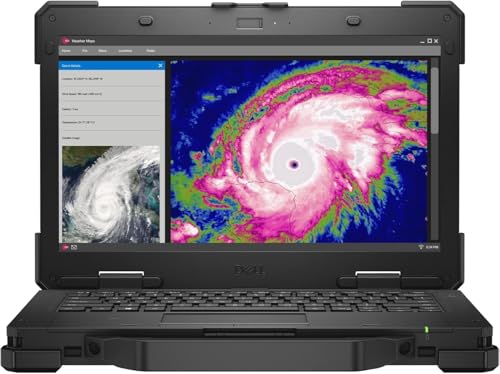
BIFL Score: 8.1 — the strongest non-Panasonic, non-Getac option on this list, and the most polished daily-driver ergonomics of any fully-rugged laptop we have tested. The Dell Latitude 7330 Rugged Extreme launched in 2022 as Dell’s compact 13-inch fully-rugged offering, sold to mid-tier fleet customers — utility crews, infrastructure inspectors, surveyors, and field engineers — at roughly $4,500 per unit new. Three years later, those units are starting to cycle onto Amazon Renewed in volume, and the configuration we recommend ships with an 11th-gen Intel Core i7-1185G7, 16GB or 32GB of RAM, a 512GB SSD, and a 13.3-inch FHD touchscreen.
What sets the 7330 apart from the Toughbook and the Getac is the user experience. Dell’s industrial designers came at the rugged category from the consumer laptop side, and the result is a fully-rugged laptop that does not feel like industrial equipment in daily use. The keyboard is full-size with proper key travel, the trackpad is a glass surface that responds to two-finger gestures, the display is an FHD 1,000-nit touchscreen with stylus support, and the chassis dimensions are close enough to a standard 13-inch laptop that the unit fits in most consumer laptop bags. For the storm chaser or war journalist who needs the laptop to survive a vehicle crash but who also needs to use it for eight hours a day in a hotel room writing copy, this is the most comfortable choice on the list.
Durability specifications are MIL-STD-810H certified, IP65 sealed (one step below the Toughbook 40 and Getac B360’s IP66 — IP65 means dust-tight and protected against low-pressure water jets, but not the heavy 12.5mm-nozzle high-pressure jets that IP66 survives), 6-foot drop on plywood, and an operating temperature range of -29°C to +60°C. The chassis is magnesium-alloy with reinforced polycarbonate corners. Optional 4G LTE with dedicated GPS is integrated into the configuration we recommend. The frame is rated for 4-foot operating drops by Dell’s own testing, with 6-foot drops surviving the 26-drop MIL-STD test method on plywood.
The repairability story is good but not class-leading. The 7330 has a removable battery (swap requires a small Phillips driver — not the no-tool hot-swap of the Toughbook or Getac), accessible storage and RAM bays, and Dell’s official service manual is publicly available. Replacement keyboards, batteries, port doors, and screen assemblies are stocked by Dell direct and through certified service partners. Original ProSupport Plus warranty does not transfer to the second owner of a Renewed unit — Amazon Renewed’s 90-day guarantee covers the gap.
Platform longevity is where the 7330 sits between the Toughbook 40 and the older Getac. The 11th-generation Intel Tiger Lake silicon is a 2021 platform that supports Windows 11 officially and is likely to support Windows 12 with minor caveats. Realistic remaining service life from a 2026 purchase is six to eight years — slightly longer than the Getac G1, slightly shorter than the brand-new Toughbook. For a laptop with daily-driver ergonomics in a fully-rugged chassis, that timeline is more than enough.
- Magnesium-alloy chassis with reinforced polycarbonate corners — MIL-STD-810H, IP65, 6ft drop on plywood (26 drops)
- 1,000-nit FHD touchscreen with active stylus support — sealed digitizer rated for glove and wet-finger input
- Removable battery, removable storage, accessible RAM bays — Dell publishes the official service manual openly for field repairs
- Daily-driver ergonomics — full-size glass trackpad and standard keyboard layout in a fully-rugged chassis means the laptop does not feel like industrial equipment in continuous use
- Daily-driver ergonomics — full-size keyboard and glass trackpad rare on rugged laptops
- 11th-gen Intel Core i7-1185G7 with 32GB RAM and 512GB SSD
- 1,000-nit FHD touchscreen with active stylus support
- Compact 13.3-inch chassis fits in standard consumer laptop bags
- 4G LTE with dedicated GPS integrated as standard
- Dell publishes the official service manual openly, supporting field repair
- IP65 sealing is one step below the IP66 of the Toughbook 40 and Getac B360
- Battery removal requires a Phillips driver (not no-tool hot-swap like Toughbook/Getac)
- Original Dell ProSupport Plus does not transfer to the second owner
- Renewed inventory is thinner than Toughbook listings — availability rotates
- Single battery configuration; no second-battery option in the standard 7330
Last update on 2026-07-13 at 08:20 / Affiliate links / Images from Amazon Product Advertising API
Panasonic Toughbook 33 Mk3 (Renewed)

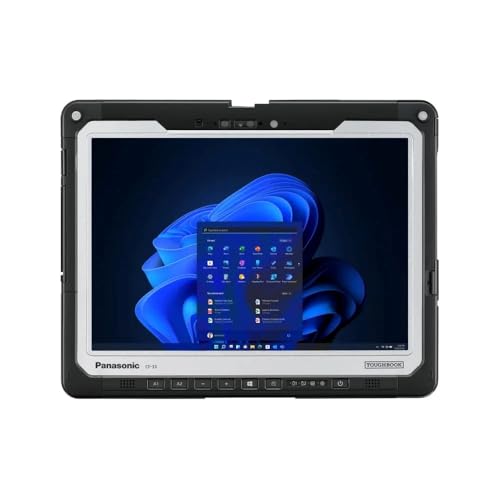
BIFL Score: 8.0 — the only fully-rugged 2-in-1 detachable on this list, and the favorite laptop of professional storm chasers, search-and-rescue crews, and anyone who needs to alternate between vehicle-mount tablet use and full-keyboard laptop use through a single shift. The Panasonic Toughbook 33 Mk3 is the third-generation refresh of Panasonic’s signature rugged convertible, with the Mk3 shipping a 10th-generation Intel Core i5, 16GB of RAM, a 512GB SSD, integrated 4G LTE, dedicated GPS, and a 12-inch QHD touchscreen with active digitizer.
The 2-in-1 form factor is what defines this laptop. The 12-inch tablet section detaches cleanly from the keyboard base — both halves are independently rated to MIL-STD-810H and IP65, both halves have hot-swappable batteries (so the tablet keeps running while you swap the keyboard battery and vice versa), and the docking mechanism is engineered for 100,000 attach-detach cycles. In practice, that means a storm chaser can run the tablet vehicle-mounted on a Gamber-Johnson cradle in the truck, detach it when the cell tower goes down to take it under shelter, and re-dock it when the convoy moves. No other laptop on this list does that.
The display is the second defining feature. At 12 inches QHD (2160×1440) and 1,200 nits, the screen is one of the brightest and highest-resolution outdoor displays on any rugged laptop. The active digitizer pen is bundled with the unit and supports 4,096 pressure levels — useful for in-field annotation of weather charts, maps, incident reports, and inspection documentation. The chassis is magnesium-alloy on both halves. Drop rating is 5 feet on plywood for the docked configuration, 4 feet for the tablet alone. IP65 is one step below IP66 — dust-tight and protected against water jets but not the heavier high-pressure spray that IP66 survives.
The repairability story is excellent. Both halves are field-serviceable, both have hot-swap batteries, the tablet’s storage and RAM are accessible through dedicated bays, and Panasonic publishes the full service manual. The Mk3 generation introduced a higher-capacity battery option that extends runtime to roughly 15 hours docked plus 8 hours on the tablet alone — a configuration that supports a full 24-hour shift without a charger.
Platform longevity is the weakest pillar at 6.5. The 10th-gen Intel platform launched in 2020, runs Windows 11 officially, and is unlikely to be officially supported through Windows 13. Realistic remaining service life is four to six years before driver attrition starts. For a Renewed unit at roughly $1,400 to $1,800, the daily versatility of the 2-in-1 form factor more than compensates for the shortened runway. If you need a vehicle-mount-capable rugged laptop with a touchscreen and stylus, this is the only realistic choice on Amazon under $2,000.
- 2-in-1 detachable convertible — both halves independently rated MIL-STD-810H and IP65, dock mechanism engineered for 100,000 cycles
- Dual hot-swap battery system — tablet and keyboard base each carry their own removable battery, allowing continuous operation across battery changes
- 12-inch QHD 1,200-nit display with active 4,096-level digitizer — outdoor-readable touchscreen with pen input survives wet-finger and glove operation
- Magnesium-alloy chassis on both halves with port-cover seals — drop rated 5ft docked, 4ft tablet-only on plywood
- Only fully-rugged 2-in-1 detachable on this list
- 12-inch QHD 1,200-nit display with bundled active digitizer pen (4,096 pressure levels)
- Both halves independently rated MIL-STD-810H and IP65
- Dual hot-swap battery system — tablet and base each carry their own battery
- Vehicle-mount compatible — designed for Gamber-Johnson and Havis cradles
- Up to 23 hours combined runtime in the high-capacity battery configuration
- 12-inch display is smaller than the other rugged laptops on this list
- Detachable form factor adds complexity for users who never need tablet mode
- 10th-gen Intel platform limits remaining service life to 4–6 years
- Tablet alone has a 4-foot drop spec — lower than most fully-rugged clamshells
- 2-in-1 keyboards have shorter key travel than fixed-keyboard laptops
Last update on 2026-07-13 at 09:22 / Affiliate links / Images from Amazon Product Advertising API
Panasonic Toughbook CF-31 Mk5 (Renewed)

BIFL Score: 7.1 — the budget BIFL entry point and a piece of computing history. The Panasonic Toughbook CF-31 Mk5 is the laptop you have probably seen strapped to a police cruiser dashboard, mounted in an ambulance, or sitting in the corner of a utility truck cab. It was Panasonic’s flagship traditional clamshell from 2010 to 2019 — a near-decade production run that put hundreds of thousands of these units into fleet service across North America. Today, those fleet units are cycling onto Amazon Renewed at $700 to $1,200, making this the cheapest legitimate fully-rugged laptop you can buy.
The CF-31 was the laptop Panasonic kept in production for years past its scheduled sunset because fleet customers refused to switch. Police departments, electric utilities, and the US military demanded the CF-31 specifically because its 13.1-inch 4:3 display matched their existing software, mounting hardware, and training. The Mk5 (the final revision, 2017–2019) is the most refined: 5th-generation Intel Core i5-5300U, 8GB or 16GB of RAM, 256GB or 512GB SSD, a 13.1-inch XGA touchscreen, integrated 4G LTE, backlit keyboard, and Windows 11 Pro support through unofficial-but-stable drivers.
Durability is where this laptop earned its reputation. MIL-STD-810H, MIL-STD-461F (the predecessor to G — still excellent EMI protection), IP65, and a 6-foot drop spec on plywood. The chassis is magnesium-alloy with reinforced port covers. The unit weighs 8.0 lbs — heavier than even the Toughbook 40 — because Panasonic’s 2010s-era design philosophy prioritized armor over weight savings. There are CF-31s in active police service today that have survived ten or more years of cruiser-mount use, daily impacts, coffee spills, freezing winter mornings, and 100°F summer dashboards. That is not marketing copy; it is documented fleet experience.
Repairability is class-leading. The CF-31 has a hot-swap battery, a removable optical drive bay, accessible storage and RAM bays, and a parts pipeline that runs deep through both Panasonic and the secondary market. Replacement keyboards, batteries, port doors, hinges, and screen assemblies are widely stocked. The unit was designed to be repaired in a police impound lot, not a Panasonic service center.
Platform longevity is the score-killer. A 5th-generation Intel Broadwell platform from 2015 is genuinely old silicon. Windows 11 runs but is unofficially supported. Windows 12 will almost certainly require unofficial workarounds. Realistic remaining useful service life on Windows is two to four years for general productivity work — significantly less than any other laptop on this list. So why is it here? Because for $700 to $1,200, you are buying the toughest 13-inch laptop ever mass-produced, with a parts ecosystem deep enough to keep the chassis running for another decade even after the silicon ages out. For a backup laptop, a glove-compartment laptop, or an entry into the BIFL philosophy on a constrained budget, the CF-31 Mk5 is unbeatable.
The Linux BIFL path. The CF-31’s Platform Longevity score is dragged down entirely by Microsoft’s TPM and CPU drift away from older silicon — not by any actual hardware limitation. Run a mainstream Linux distribution and the score profile changes substantially. Ubuntu 24.04 LTS receives security updates through 2034, and the lighter Lubuntu and Linux Mint XFCE spins run faster on 5th-gen Intel hardware than Windows 11 ever will, because they were designed for it. The CF-31’s Intel HD 5500 graphics, I218-LM Ethernet, 7265 Wi-Fi, capacitive touchscreen, backlit keyboard, hot-swap battery, and even the Sierra Wireless EM7305 4G LTE module have mature mainline kernel drivers. The r/Toughbook community has documented installation, calibration, and modem-setup procedures across multiple distributions. The price of admission is leaving the Windows software ecosystem behind — a real cost, but one the BIFL-purist who is buying a 2015 laptop in 2026 has likely already accepted. On Ubuntu LTS, the CF-31’s chassis-plus-OS lifecycle stretches comfortably to 2034 and beyond. That makes it not just the cheapest fully-rugged laptop on Amazon, but the longest-lived one on this list when measured by remaining supported-OS runway.
- Magnesium-alloy chassis tested across a decade of fleet service — MIL-STD-810H, MIL-STD-461F EMI shielding, IP65, 6ft drop on plywood
- Hot-swap battery and removable optical drive bay — chassis engineered for repair in a police impound lot, not a service center
- Deepest parts pipeline of any rugged laptop ever built — replacement keyboards, batteries, screens, hinges, and port doors stocked widely on Amazon and through aftermarket suppliers a decade after end-of-life
- Mainline Linux kernel support — Ubuntu 24.04 LTS extends supported-OS runway through 2034, with documented community drivers for Wi-Fi, LTE modem, touchscreen, and backlit keyboard
- Cheapest legitimate fully-rugged laptop on Amazon at $700 to $1,200
- Deepest aftermarket parts pipeline of any rugged laptop ever built
- Backlit keyboard with full-travel keys remains class-leading for typing
- 13.1-inch 4:3 display matches legacy fleet mounting hardware and field software
- Hot-swap battery and removable optical drive bay
- Linux-friendly — Ubuntu 24.04 LTS extends OS runway through 2034 with mature mainline drivers
- 5th-generation Intel Broadwell silicon (2015) is the oldest on this list
- Windows 11 runs unofficially; Windows 12 is unlikely to support this platform
- 8.0 lbs is the heaviest laptop on this list
- XGA (1024×768) 4:3 display resolution is lower than every other laptop here
- Original Panasonic warranty has long since expired

Last update on 2026-07-13 at 09:22 / Affiliate links / Images from Amazon Product Advertising API
Comparison Table
Side-by-side specifications for all five rugged laptops on this list. Use this to spot which trade-offs matter most for your use case before clicking through to Amazon.
| Spec | Toughbook 40 Mk2 | Getac B360 G1 | Dell 7330 Rugged Ext | Toughbook 33 Mk3 | Toughbook CF-31 Mk5 |
|---|---|---|---|---|---|
| BIFL Score | 9.2 | 8.2 | 8.1 | 8.0 | 7.1 |
| Condition | NEW | Renewed | Renewed | Renewed | Renewed |
| Display | 14″ FHD 1200-nit | 13.3″ FHD 1400-nit | 13.3″ FHD 1000-nit touch | 12″ QHD 1200-nit + pen | 13.1″ XGA touch |
| CPU | Intel Ultra 5 135H | Intel i5 10th-gen | Intel i7-1185G7 | Intel i5 10th-gen | Intel i5-5300U |
| RAM / Storage | 32GB / 512GB | 16-32GB / SSD | 16-32GB / 512GB | 16GB / 512GB | 8-16GB / 256-512GB |
| Drop Spec | 6 ft | 6 ft | 6 ft | 5 ft docked / 4 ft tablet | 6 ft |
| IP Rating | IP66 | IP66 | IP65 | IP65 | IP65 |
| MIL-STD | 810H + 461G | 810H + 461G | 810H | 810H | 810H + 461F |
| Weight | 7.4 lbs | 5.11 lbs | 5.5 lbs | 4.6 lbs (full) | 8.0 lbs |
| Hot-Swap Battery | Dual | Dual | Single removable | Dual (split) | Single |
| Price (~) | $4,500-$8,000 | $1,400-$2,200 | $1,500-$2,500 | $1,400-$1,800 | $700-$1,200 |
Two patterns stand out. First, the price spread is enormous — the new Toughbook 40 Mk2 costs five to ten times what a refurbished CF-31 Mk5 costs, but the durability scores compress to a 9.2-vs-7.1 spread. The Renewed-fleet path captures most of the BIFL value at a fraction of the cost. Second, every laptop on this list shares the same fundamental durability profile: 6-foot drop, IP65 minimum, MIL-STD-810H minimum, magnesium-alloy chassis. The differentiation lives in the secondary pillars — display, weight, form factor, and remaining platform runway — not in raw ruggedness.
Our Rugged Recommendation
The right pick depends entirely on what you are willing to trade off. Here is how we would frame the decision for the four most common reader profiles we built this list for:
If you have the budget and want the toughest laptop on the market with full warranty: the Panasonic Toughbook 40 Mk2 is in a category of its own. The only laptop on this list still in production, the only one with a fresh Panasonic ProTect warranty, the only one running 2024-generation Intel silicon with a realistic ten-year platform runway. Score 9.2. If money is not the constraint, this is the laptop.
If you want fleet-grade durability under $2,500: the Getac B360 G1 (Renewed) is the strongest combination of toughness, weight (5.11 lbs — the lightest fully-rugged 13.3″ laptop you can buy), and price. The 1,400-nit display outperforms most laptops costing four times as much. Score 8.2. For storm chasers, war journalists, and overlanders who need something that survives a vehicle wreck and still fits in a normal laptop bag, this is the pick.
If you need a touchscreen 2-in-1 with vehicle-mount capability: the Panasonic Toughbook 33 Mk3 (Renewed) has no real competition. The detachable 12″ QHD tablet docks into a Gamber-Johnson cradle, runs the truck navigation, and detaches when you need to bring it under shelter. The active digitizer pen is bundled. Score 8.0. This is the laptop professional storm chasers actually run.
If you want into the BIFL philosophy under $1,000: the Panasonic Toughbook CF-31 Mk5 (Renewed) is the entry point. Run Windows for 2-4 more years, or run Ubuntu LTS and stretch the same chassis through 2034 and beyond. The cheapest legitimate fully-rugged laptop on Amazon and the deepest parts pipeline of any laptop ever built. Score 7.1 (Windows) / 8.1 (Linux LTS). This is also the right pick for a glove-compartment backup laptop, a vehicle-mount build, or a Linux experimentation chassis.
Whichever rugged laptop you settle on, the desk it sits on deserves the same BIFL treatment. Pair your laptop pick with our companion guides on the most durable keyboards for typing-heavy days, the most durable mouse for everyday work, and the most durable gaming headsets for long calls or focus blocks — three more categories where buy-once economics beat the consumer-replacement treadmill.
Honorable Mention: Framework Laptop 13
One laptop on the BIFL longlist did not make the rugged top 5, but is worth a separate mention because it represents a different interpretation of the BIFL philosophy entirely. The Framework Laptop 13 is not rugged. It carries no IP rating, no MIL-STD-810H certification, and the chassis is plastic over an aluminum frame. By the strict ruggedness criteria of this list, it scores poorly on Frame & Build.
What the Framework 13 has instead is the most repairable and upgradable consumer laptop ever sold. Every single component — mainboard, screen, keyboard, ports, battery, RAM, SSD, even the hinges — is user-serviceable with a single included Torx driver and a publicly documented service manual. The mainboard itself is a swappable cartridge: when the CPU generation falls behind, you order a new mainboard for $500–$800 and slide it in, leaving the chassis, screen, keyboard, and ports intact. Framework has shipped four mainboard generations on the same chassis since 2021 and has publicly committed to maintaining that compatibility indefinitely.
For the BIFL purist who weights Repairability and Platform Longevity at 50% of the total score and does not need MIL-STD certification, the Framework 13 is genuinely the best laptop in the world. For everyone else on this list — storm chasers, war journalists, overlanders, anyone who needs the laptop to survive a 6-foot drop into a wet trail — it is the wrong tool. We mention it here for the reader whose definition of BIFL leans harder on “I never want to throw the chassis away” than on “I never want to break the chassis.” Framework sells direct at frame.work; we earn no affiliate commission on Framework purchases and link to them as an editorial reference, not a monetized placement.
Demoted Models
Four laptops appeared in our previous most-durable-laptop ranking and have been demoted from the 2026 top list. Each has an explicit reason; each is still a credible rugged laptop in its own right. We list them here for readers who may have specific needs the new top 5 does not address.
Mildef RS13
The Swedish-built Mildef RS13 remains one of the toughest fully-rugged laptops in the world, with MIL-STD-810H, IP67 (better water resistance than anything on the new top 5), and Class I Division 2 certification. It does not appear on the 2026 list because Mildef sells almost exclusively through B2B and military procurement channels — the unit is essentially unavailable on Amazon US even as a Renewed listing. For readers in defense or critical-infrastructure procurement, the RS13 is worth investigating directly through Mildef. For the consumer-buyable scope of this list, it does not qualify.
Durabook S15
The Durabook S15 is a 15.6-inch semi-rugged that slotted into our 2024 list as a larger-display option. With IP53 sealing (splash-resistant only, not dust-tight) and a reduced 4-foot drop spec, it does not meet the fully-rugged threshold we set for the 2026 refresh. The S15 remains a credible business-rugged option for warehouse and inspection workflows where genuine field exposure is rare, but it is not in the same durability class as anything on the new top 5.
Lenovo ThinkPad X1 Carbon
The X1 Carbon was always a stretch on a rugged-laptop list — it is a premium business ultrabook with MIL-STD-810H certification under controlled conditions, not a fully-rugged field laptop. The carbon-fiber chassis is durable for what it is, but with no IP rating, no field-replaceable battery on recent generations, and a fundamentally consumer-grade design philosophy, it belongs on a different list. Excellent laptop for the right buyer; not a rugged laptop in the sense this article uses the term.
Dell Latitude 5430 Rugged
The Latitude 5430 Rugged is Dell’s semi-rugged offering — IP53, 3-foot drop, MIL-STD-810H. It was our budget pick in the 2024 list before the Toughbook CF-31 Mk5 entry made the category accessible at a much lower price point. The 5430 is still a fine semi-rugged business laptop, and it remains a reasonable choice for buyers who need something tougher than a standard ThinkPad but lighter than the fully-rugged Toughbook and Getac options. For this 2026 fully-rugged list it does not qualify on IP rating alone.
FAQ
What is a Toughbook?
Toughbook is Panasonic’s brand name for their line of fully-rugged and semi-rugged laptops, tablets, and 2-in-1 convertibles. The line launched in 1996 with the CF-25 and has been the dominant rugged laptop platform in North American police, utility, and military fleet service ever since. Current generation includes the Toughbook 40 (14″ clamshell, our top pick), Toughbook 55 (14″ semi-rugged modular), Toughbook 33 (12″ 2-in-1 convertible), and the Toughbook G2 tablet. “Toughbook” has become functionally synonymous with rugged laptop in the same way Kleenex is to tissue or Xerox is to copying — Getac and Dell make excellent rugged laptops too, but the brand recognition belongs to Panasonic.
Toughbook vs Dell Rugged — which is better?
For raw durability and modular repairability, Panasonic Toughbook wins. The Toughbook 40 Mk2 has eight modular bays, dual hot-swap batteries, MIL-STD-461G EMI shielding, IP66 sealing, and a parts pipeline that runs deeper than any other rugged laptop OEM. For daily-driver ergonomics, display quality, and integration with mainstream IT environments, the Dell Latitude 7330 Rugged Extreme wins. Dell’s industrial designers approached the rugged category from the consumer-laptop side, and the result is a laptop that feels less like industrial equipment in continuous office use. Picking between them comes down to whether you weight “survives field deployment” or “comfortable for an 8-hour writing session” higher in your buying decision.
Toughbook vs Getac — which lasts longer?
For a unit purchased new today, the Toughbook 40 Mk2 has the longer realistic service life because it ships with current-generation Intel Ultra silicon and full Panasonic ProTect warranty support. For a Renewed unit, the comparison is closer — both Toughbook and Getac engineer their fleet laptops for 7–10 years of active service, both have deep parts pipelines, and both have similar refurbishment availability on Amazon. The deciding factor for Renewed buyers is which OEM’s specific generation is available at the price point you can spend. Getac runs lighter; Panasonic runs deeper on modular repair. Both deliver true BIFL chassis longevity in their fully-rugged tiers.
Are refurbished Toughbooks worth buying?
Yes — and this is the central thesis of this article. Refurbished fleet Toughbooks (and refurbished Getacs and refurbished Dell Rugged units) cycle onto Amazon at 40-60% of new price after 3-5 years of fleet service. Because these laptops were engineered for a 7-10 year service life from day one, a 4-year-old fleet Toughbook still has 3-6 years of meaningful service ahead of it under the next owner’s lighter consumer use case. The chassis was built for repair, the parts pipeline is deep, and Amazon’s Renewed program adds a 90-day buyer guarantee on top. For consumers who can accept cosmetic wear (scuffs, scratches, sticker residue), the BIFL value is unmatched anywhere else in the laptop market.
Is a military grade laptop good for everyday use?
It depends entirely on which laptop and which “everyday.” A Toughbook 40 Mk2 is overkill for a college student writing essays at a coffee shop — too heavy, too expensive, too much industrial chassis design that does not need to be carried into a classroom. The same Toughbook 40 in the back of a Land Cruiser through three weeks in Patagonia is exactly the right tool. For everyday consumer office work, the Dell 7330 Rugged Extreme and the Toughbook 33 Mk3 are the most ergonomically friendly options on this list — they cross over from worksite to coffee shop without feeling out of place. The CF-31 Mk5 and the Toughbook 40 Mk2 are field-first laptops that will feel like industrial equipment in everyday use. Choose based on which environment you spend more hours in.
What is the cheapest fully-rugged laptop on Amazon?
The Panasonic Toughbook CF-31 Mk5 (Renewed) at $700 to $1,200 depending on configuration. It is the only true fully-rugged laptop available on Amazon under $1,000, and it remains genuinely fully-rugged — MIL-STD-810H, MIL-STD-461F, IP65, 6-foot drop, magnesium-alloy chassis. The trade-off is the 5th-generation Intel platform from 2015, which limits Windows useful life to roughly 2-4 more years. Running Linux (Ubuntu 24.04 LTS or Linux Mint) extends the chassis runway through 2034 and beyond. For the under-$1,000 BIFL buyer, this is the only laptop that qualifies.
The five laptops on this list represent the full BIFL spectrum for rugged laptops in 2026 — from a brand-new $5,000 Panasonic flagship to a $700 refurbished fleet workhorse. If you are new to the BIFL philosophy, read our explainer on what Buy It For Life means for context on the four-pillar scoring framework we apply across every category. For the technical detail behind the IP and MIL-STD ratings cited throughout this article, see our IP and NEMA rating guide and our military specifications standards explainer. The full BIFL test methodology we apply to every product is documented in how we test rugged gear. To round out a BIFL field-electronics setup, see our companion reviews on the most durable Android phone and the most durable wireless earbuds — battery-powered categories where the BIFL framework applies in a different shape.
Last tested and updated: May 2026.

- Most Durable Eyeglass Frames - May 8, 2026
- Most Durable Laptops - May 2, 2026
- Most Durable Wireless Earbuds - April 14, 2026